
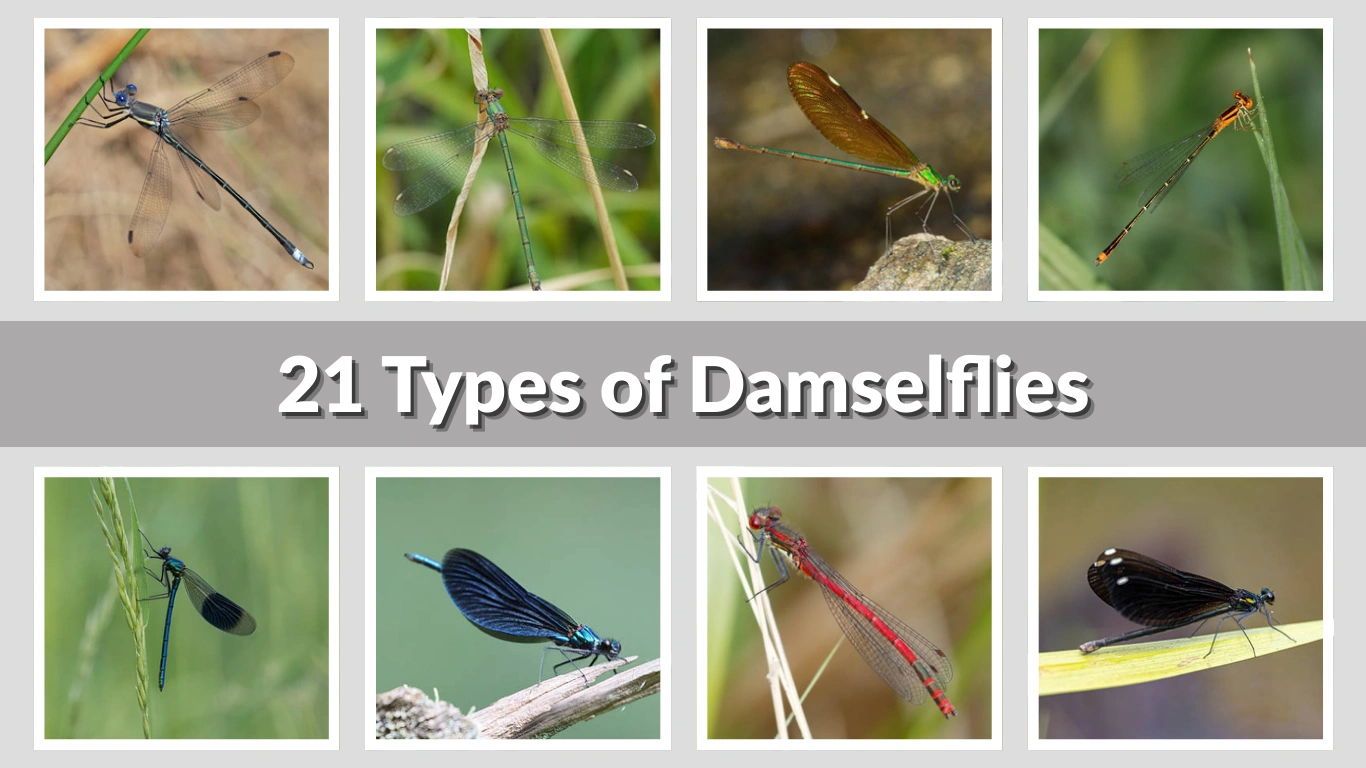
Damselflies are delicate, colorful insects closely related to dragonflies, known for their slender bodies, graceful flight, and wings held together when resting. With many species found across ponds, streams, and wetlands, each type has its own unique colors and behaviors. This guide highlights 21 notable damselflies, giving you a quick overview of their diversity and charm—perfect for nature lovers, beginners, or anyone exploring freshwater wildlife.
1. Blue-Tailed Damselfly
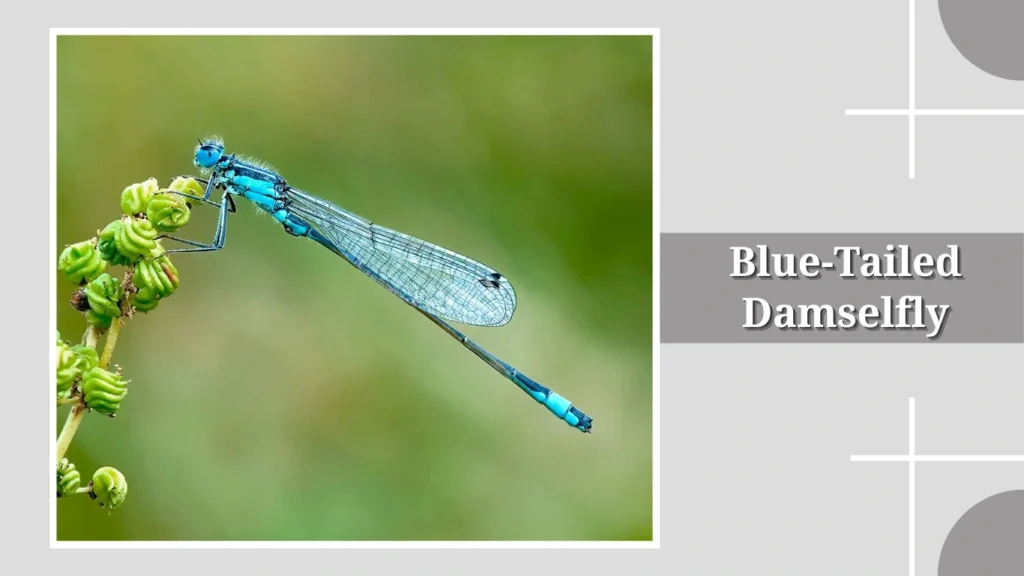
The Blue-Tailed Damselfly is one of the most common and easily recognized damselflies, known for its slender form and distinctive blue tail segment. Frequently found near ponds, lakes, and marshes, it is a graceful flier and a favorite among nature watchers.
Identification
- Slender body with black segments and a bright blue tail tip
- Males show a pale blue thorax with black striping
- Females vary in color, often green, blue, or brown
- Clear, narrow wings held together when at rest
- Typically 3–3.5 cm in length
Habitat and Range
Blue-Tailed Damselflies are widespread across Europe, Asia, and parts of northern Africa. They inhabit ponds, canals, lakes, marshes, and ditches with plenty of vegetation. Their adaptability allows them to thrive in both natural and man-made water bodies.
Behavior and Diet
These damselflies are agile hunters, feeding on tiny flying insects such as midges, gnats, and mosquitoes. They often perch on grasses or reeds near the water’s edge, making short flights to catch prey. Males frequently defend small territories around preferred perching spots.
Life Cycle
Nymphs develop underwater, hunting small aquatic insects until they mature. Adults emerge in late spring through summer. Once airborne, they spend their time feeding, mating, and laying eggs among submerged plants, ensuring the next generation continues the cycle.
2. Azure Damselfly
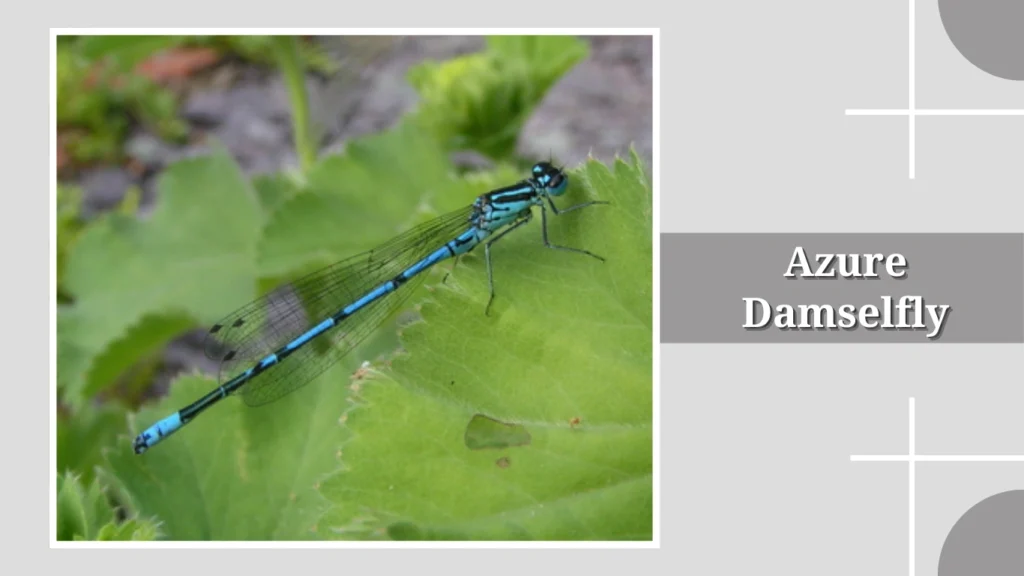
The Azure Damselfly is a vibrant and elegant species known for its bright blue coloration and delicate form. Common around calm freshwater habitats, it is often seen hovering low over ponds and streams during warm sunny days.
Identification
- Males are bright azure blue with black banding on the abdomen
- Females are greenish or duller blue with thicker black markings
- Clear, narrow wings held together above the body when resting
- Slender body measuring around 3–3.5 cm
- Distinct black “U-shaped” mark on the second abdominal segment (males)
Habitat and Range
Azure Damselflies are widespread across Europe, extending into parts of Asia. They prefer still or slow-moving waters such as ponds, lakes, canals, and quiet streams. Vegetation-rich environments provide ideal sites for perching, feeding, and breeding.
Behavior and Diet
These damselflies are active hunters, capturing tiny flying insects like midges, gnats, and mosquitoes. Males are territorial, often patrolling small stretches of vegetation. Pairs can frequently be seen in tandem as they search for suitable egg-laying sites.
Life Cycle
The aquatic nymphs thrive among submerged plants, feeding on small aquatic invertebrates. After developing for several months, they emerge as adults in late spring and throughout summer. Adults remain active during warm weather, spending their days feeding, mating, and defending territories.
3. Ebony Jewelwing
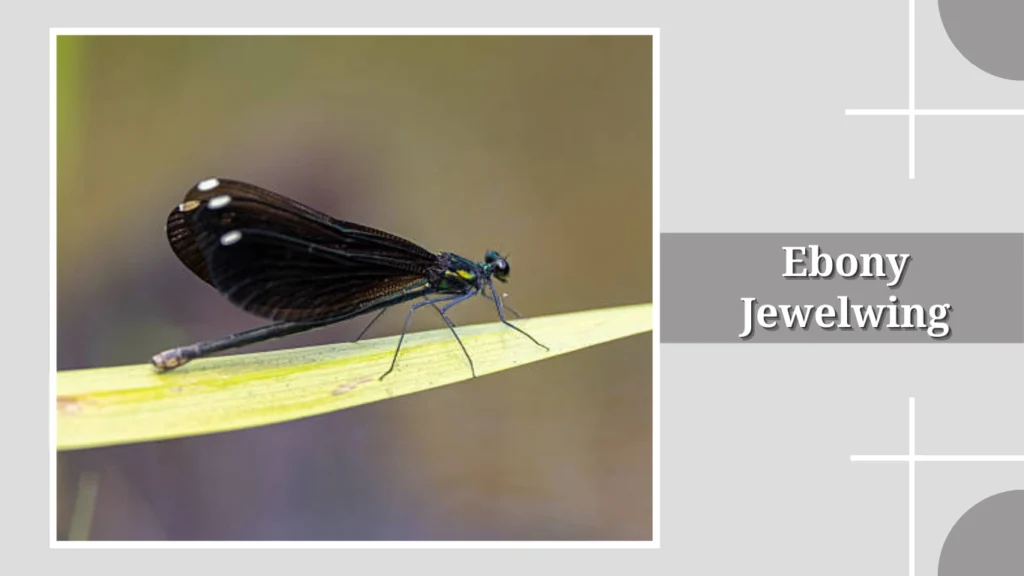
The Ebony Jewelwing is a striking damselfly known for its velvety black wings and shimmering metallic body. Often found near shaded streams and rivers, it moves with a fluttering grace that makes it stand out among other damselflies.
Identification
- Broad, solid black wings in both males and females
- Males have a metallic blue-green body; females are bronze-green
- Females feature a small white spot near the wing tips
- Slender body, typically 4.5–5.5 cm long
- Wings are held open like a butterfly when perching
Habitat and Range
Ebony Jewelwings inhabit eastern North America, especially in forested regions. They prefer clean, slow-moving streams, creeks, and shaded rivers where vegetation overhangs the water. They thrive in cool, wooded environments with dappled sunlight.
Behavior and Diet
These damselflies have a slow, fluttering flight, often compared to a dancing butterfly. They feed on small flying insects such as gnats, mosquitoes, and midges. Males defend shaded perching spots along streams, performing courtship displays with their wings.
Life Cycle
Nymphs develop in clear, flowing streams, feeding on aquatic insects and tiny crustaceans. Adults emerge in late spring through summer. Their distinctive black wings and glowing bodies make them one of the most recognizable damselflies in wooded waterways.
4. American Rubyspot
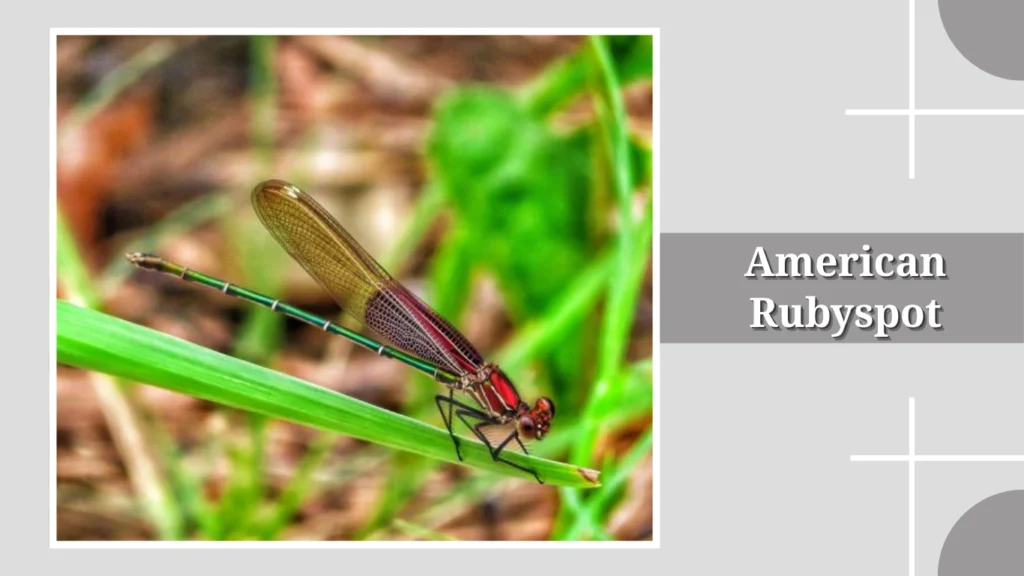
The American Rubyspot is a dazzling damselfly named for the vivid red wing bases found on males. Common along rivers and streams, it is one of North America’s most visually striking damselflies.
Identification
- Males have bright red wing patches near the base
- Female wings are clear with subtle amber or brown tones
- Male body is metallic red and green; female body is bronze or greenish
- Long, slender form typically 4–5 cm in length
- Wings held open at rest, similar to other rubyspots and jewelwings
Habitat and Range
American Rubyspots are found throughout eastern, central, and southwestern North America. Their preferred habitats include rivers, creeks, and moderately flowing streams with rocky or vegetated edges. They thrive in sunny, open stretches of moving water.
Behavior and Diet
These damselflies often perch on rocks, plants, or logs near water. Males are territorial and display their bright wings to attract mates or deter rivals. They hunt small flying insects such as gnats, midges, and mosquitoes with quick aerial movements.
Life Cycle
Nymphs develop in riverbeds or among aquatic plants, feeding on small invertebrates. Adults emerge in late spring and remain active throughout summer. Their vibrant red wing coloration makes the American Rubyspot an unmistakable sight along flowing waterways.
5. Common Bluet
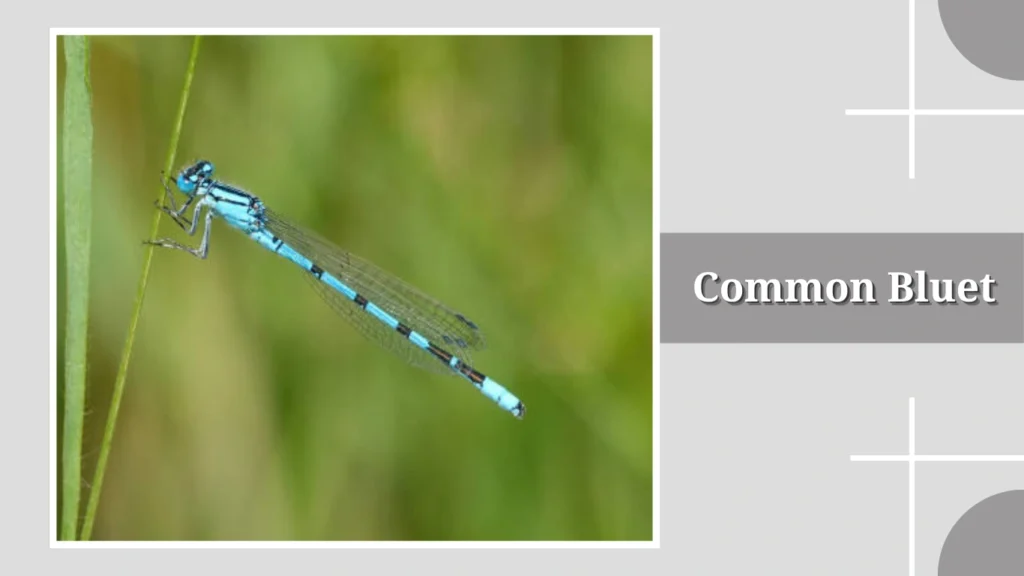
The Common Bluet is a widespread and delicate damselfly known for its soft blue coloration and presence around still or slow-moving waters. Frequently seen perched on grasses or lily pads, it is one of the most familiar bluet species in North America.
Identification
- Males are light to medium blue with black banding along the abdomen
- Females vary from blue to greenish or brown with darker markings
- Clear, narrow wings held together when resting
- Slender body measuring about 3–3.5 cm long
- Distinctive “bluet” patterning with alternating blue and black segments
Habitat and Range
The Common Bluet is found across most of North America. It inhabits ponds, lakes, slow streams, marshes, and even man-made water bodies. It thrives in environments with abundant emergent vegetation for perching and breeding.
Behavior and Diet
These damselflies are active during warm weather, feeding on tiny flying insects such as gnats, midges, and mosquitoes. Males defend small areas among shoreline plants, while pairs are often seen flying in tandem during mating.
Life Cycle
Nymphs develop underwater, feeding on aquatic insects and microinvertebrates. Adults emerge in late spring through summer and spend their days hunting, mating, and perching on floating vegetation. Their widespread presence and gentle color make them easy to spot around freshwater habitats.
6. Eastern Forktail
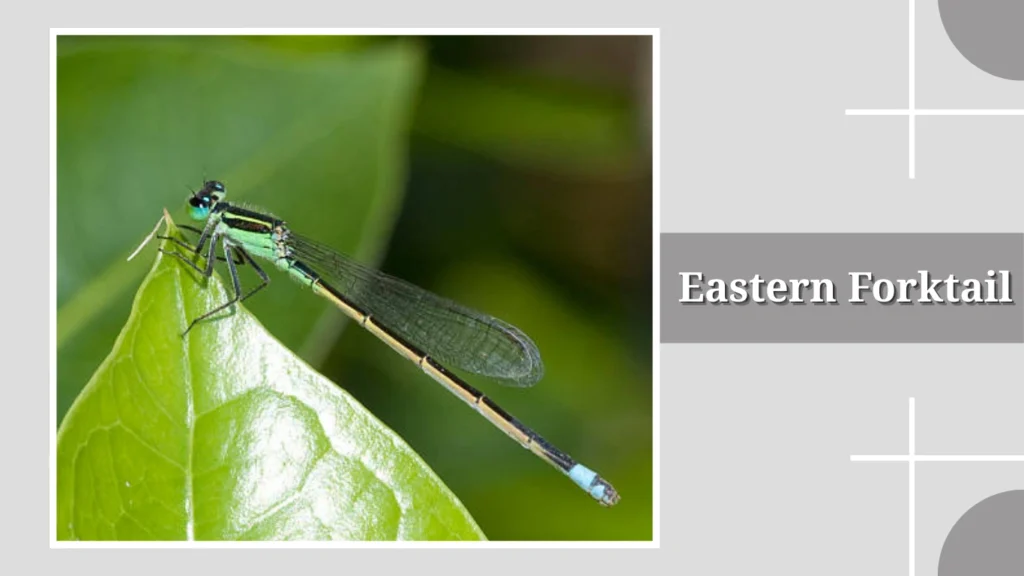
The Eastern Forktail is a small and colorful damselfly frequently seen around ponds, marshes, and quiet lakes. Known for its bright green thorax and distinctive tail markings, it is one of the most common damselflies in eastern North America.
Identification
- Males have a bright green thorax with a black dorsal stripe
- Abdomen is mostly black with a pale blue tip
- Females are more variable, ranging from orange to blue to green
- Clear, narrow wings held together when resting
- Small size, typically 2.5–3.5 cm long
Habitat and Range
Eastern Forktails inhabit the eastern and central United States and parts of Canada. They thrive in ponds, marshes, ditches, lakes, and slow-moving streams. They are highly adaptable and often found even in heavily vegetated or urban waters.
Behavior and Diet
These damselflies are energetic hunters, feeding on tiny flying insects such as midges, mosquitoes, and gnats. Males usually perch low on grasses and water plants, defending small areas while waiting for mates. They frequently fly short distances to catch prey.
Life Cycle
Nymphs develop underwater in vegetated shallows, feeding on small aquatic insects. Adults emerge in spring and continue through summer. Their bright green-and-blue coloration and abundance make them one of the most recognized damselflies in their range.
7. Variable Damselfly
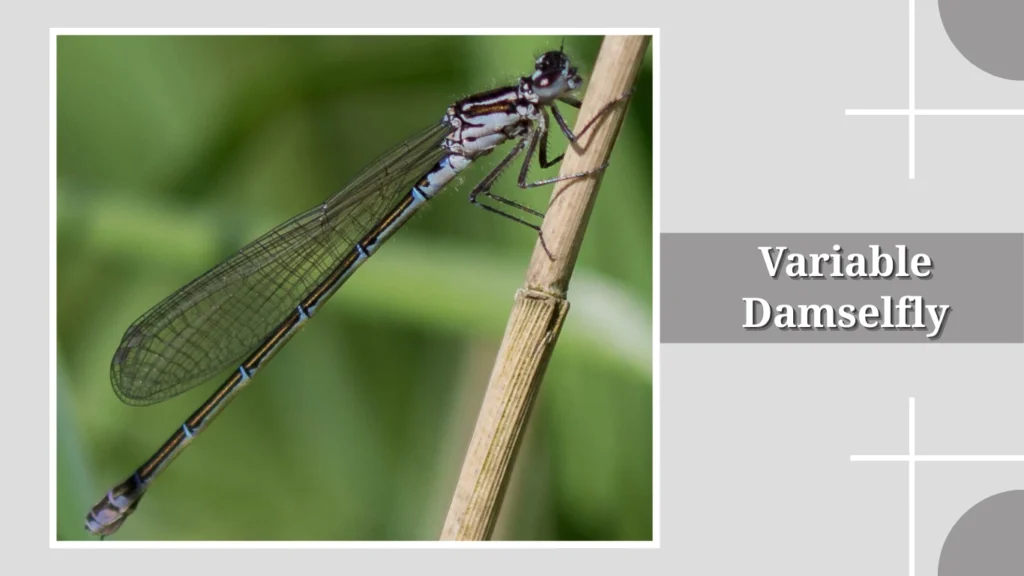
The Variable Damselfly is a slender and attractive species known for the many subtle color variations found among individuals. Common across Europe, it thrives in lush, vegetated wetlands and is especially active during warm summer months.
Identification
- Males are bright blue with black markings that vary in shape and size
- Females range from blue to greenish or brown, also with variable patterns
- Clear, narrow wings held closed above the body
- Slender body typically 3–3.5 cm long
- Male’s second abdominal segment often shows a distinctive “mercury droplet” mark
Habitat and Range
Variable Damselflies inhabit much of Europe, especially in western and central areas. They prefer ponds, marshes, lakes, canals, and wetlands rich in submerged and floating vegetation. Shallow, sheltered waters are ideal.
Behavior and Diet
These damselflies are agile hunters, preying on small flying insects such as gnats, midges, and mosquitoes. Males often defend small territories within thick vegetation. Pairs are frequently seen in tandem during egg-laying.
Life Cycle
Nymphs develop in still or gently flowing waters, feeding on tiny aquatic creatures. Adults emerge from late spring through mid-summer. Their name comes from the many variations in markings and colors, making each individual slightly unique.
8. Large Red Damselfly
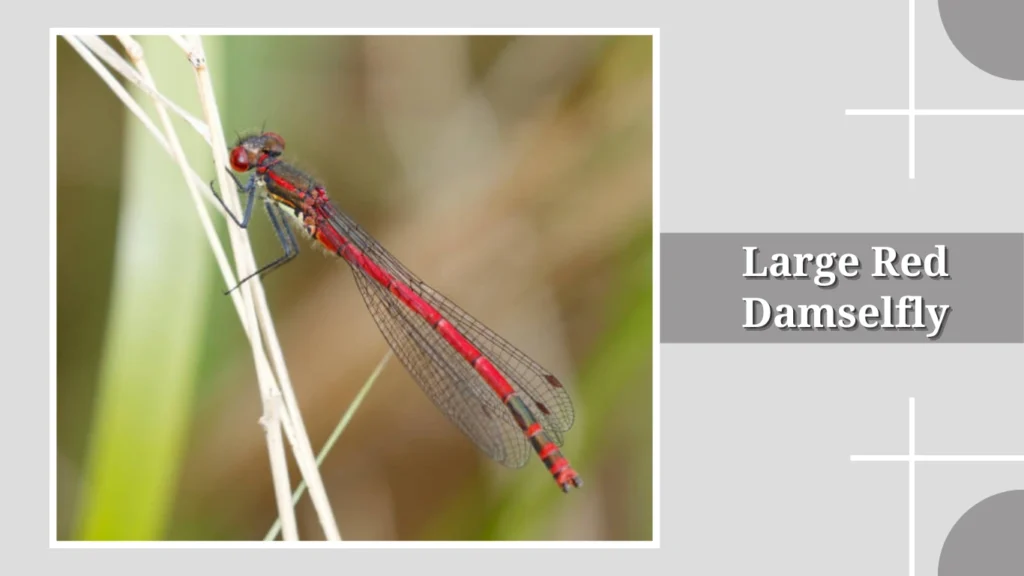
The Large Red Damselfly is one of the earliest damselflies to appear in spring and is easily recognized by its rich red body. Common across Europe, it is often seen basking in sunlight near ponds and slow-moving waters.
Identification
- Striking red abdomen with black bands
- Thorax is black with yellow or red side stripes
- Females may show more black patterning than males
- Clear wings with narrow, delicate veins
- Medium size, typically 3.5–4.5 cm long
Habitat and Range
Large Red Damselflies inhabit much of Europe and parts of Asia. They prefer ponds, garden pools, marshes, heathland bogs, and slow-moving streams. They thrive in sunny, sheltered habitats with abundant vegetation.
Behavior and Diet
These damselflies hunt small flying insects such as midges, gnats, and mosquitoes. Males often defend small territories, perching on reeds or bushes. Their bright coloration makes them highly visible as they dart through vegetation.
Life Cycle
Nymphs develop in shallow freshwater, feeding on tiny aquatic invertebrates. Adults emerge early in spring and remain active into summer. Their vivid red coloration and early-season appearance make them one of the most recognizable damselflies in their range.
9. Red-Eyed Damselfly
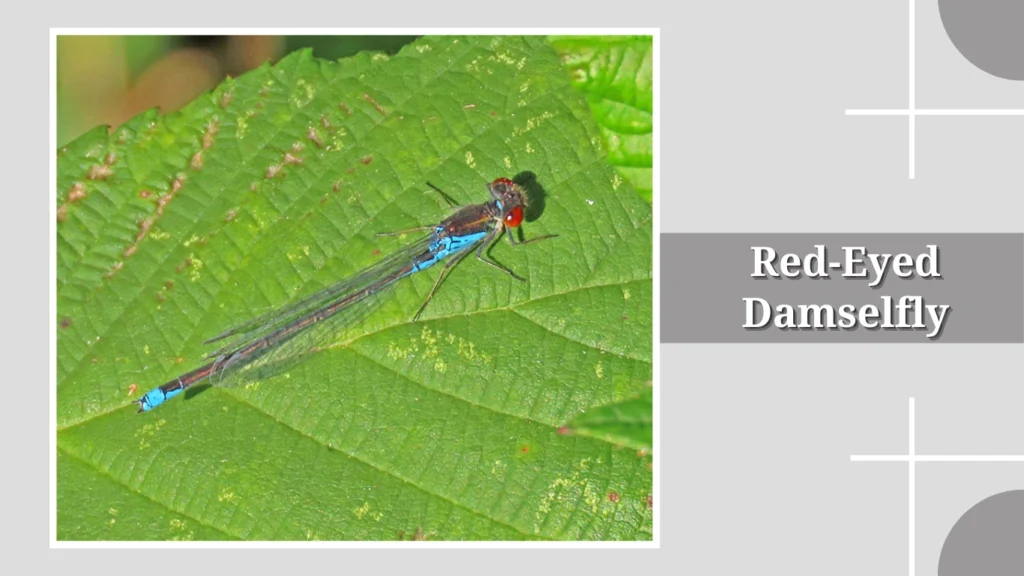
The Red-Eyed Damselfly is a beautiful and easily recognizable species known for its vivid scarlet eyes and striking blue-and-black body. Often found near ponds and lakes rich in vegetation, it is a favorite among dragonfly and damselfly enthusiasts.
Identification
- Males have bright red eyes and a blue-and-black patterned body
- Females are darker, often brown with subtle blue markings
- Clear wings held together above the body when at rest
- Slender body typically measuring 3–4 cm long
- Males often show a slightly metallic sheen on the thorax
Habitat and Range
Red-Eyed Damselflies are common across Europe and parts of western Asia. They prefer ponds, lakes, canals, and slow streams with abundant floating vegetation, especially water lilies and other broad-leaved plants.
Behavior and Diet
These damselflies actively hunt tiny flying insects including gnats, midges, and mosquitoes. Males defend small territories on floating vegetation, often perching close to the water surface. They are frequently seen in pairs during mating and egg-laying.
Life Cycle
Nymphs develop among submerged plants, feeding on small aquatic invertebrates. Adults emerge in late spring through summer. Their dramatic red eyes and vivid coloration make them one of the most striking damselflies in vegetated freshwater habitats.
10. Banded Demoiselle
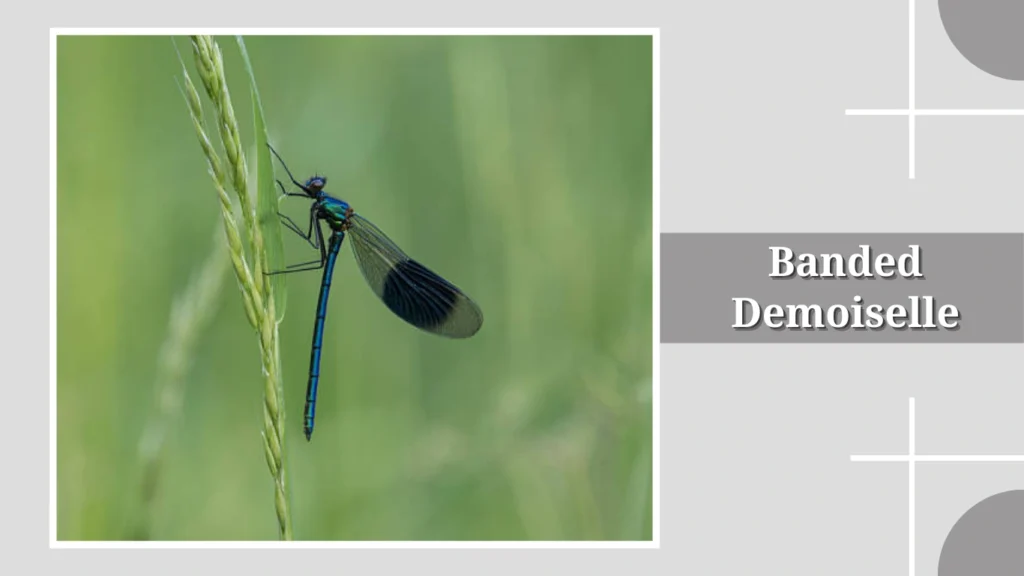
The Banded Demoiselle is an elegant and eye-catching damselfly known for its fluttering flight and beautifully colored wings. Frequently seen along rivers and streams, it is one of the most iconic damselflies found in Europe.
Identification
- Males have metallic blue-green bodies with a dark, bold band across each wing
- Females are metallic green with clear, lightly tinted wings
- Broad, fluttering wings held open when perching
- Slender body measuring 4.5–5 cm long
- Males display wing-banding prominently during courtship flights
Habitat and Range
Banded Demoiselles inhabit much of Europe and parts of western Asia. They prefer slow-moving rivers and streams with sandy or silty bottoms. Grassy, sunny banks with ample vegetation offer ideal perching and breeding conditions.
Behavior and Diet
These damselflies have a graceful, butterfly-like flight. They hunt small insects such as midges, gnats, and mosquitoes near water. Males are territorial and perform elaborate wing displays to attract females or deter rivals.
Life Cycle
Nymphs live in riverbeds among aquatic plants, feeding on small invertebrates. Adults emerge in late spring and remain active through summer. Their bold wing markings and shimmering bodies make them one of the most admired damselflies across their range.
11. Beautiful Demoiselle
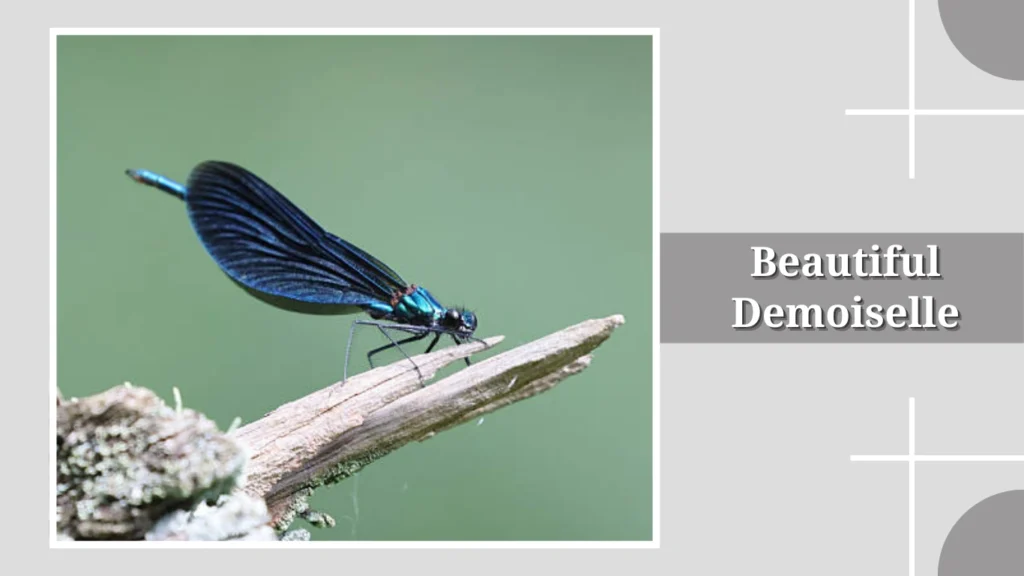
The Beautiful Demoiselle is a stunning damselfly known for its deep, iridescent colors and graceful flight over streams and rivers. Its shimmering wings and metallic body make it one of the most striking species in Europe.
Identification
- Males have metallic blue or blue-green bodies with dark, fully colored wings
- Females are metallic green or bronze with smoky, lightly tinted wings
- Broad wings held open at rest, similar to butterflies
- Body length typically 4.5–5 cm
- Strong, fluttering flight often above fast-flowing water
Habitat and Range
Beautiful Demoiselles are found across western and southern Europe. They prefer fast-flowing rivers and streams with gravel or rocky bottoms. They thrive in sunny, wooded areas where vegetation grows along the water’s edge.
Behavior and Diet
These damselflies feed on small flying insects such as gnats, midges, and mosquitoes. Males defend territories along streams, displaying their dark wings to attract females. Their slow, drifting flight makes them easy to observe near running water.
Life Cycle
Nymphs develop in clean, fast-flowing streams, feeding on aquatic insects and tiny crustaceans. Adults emerge in late spring through summer. Their dark, shimmering wings and elegant flight make them one of the most visually stunning damselflies in their range.
12. Rainbow Bluet
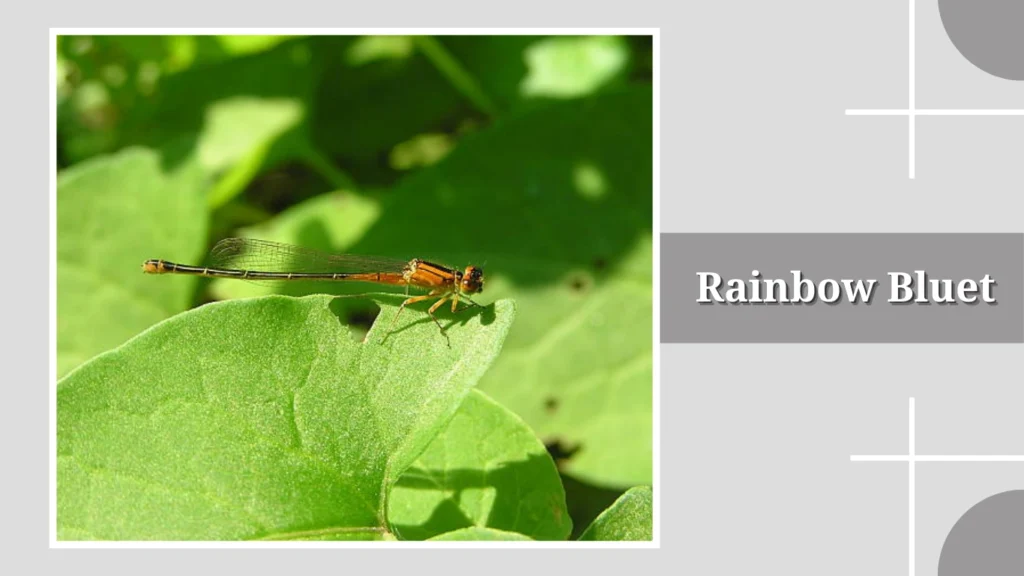
The Rainbow Bluet is a colorful and delicate damselfly known for its vibrant combination of blues, greens, and purples. Found near calm freshwater habitats, it is admired for its striking appearance and gentle, hovering flight.
Identification
- Males display bright blue bodies with purple and green tones
- Females are usually greenish or brown with subtle blue highlights
- Clear, narrow wings held closed when resting
- Slender body, typically 3–4 cm long
- Distinct multicolored thorax giving a “rainbow” effect
Habitat and Range
Rainbow Bluets inhabit ponds, marshes, lakes, and quiet streams across parts of North and Central America. They prefer sunny, sheltered water bodies with abundant vegetation for perching and breeding.
Behavior and Diet
These damselflies are agile, feeding on small insects such as gnats, midges, and mosquitoes. Males often perch on floating plants or shoreline grasses, defending small territories. Their gentle flight and bright coloration make them easy to spot near calm waters.
Life Cycle
Nymphs develop underwater, hunting small aquatic invertebrates. Adults emerge in late spring and remain active through summer. Their vivid coloration and preference for vegetated wetlands make them a highlight for damselfly observers.
13. Fragile Forktail
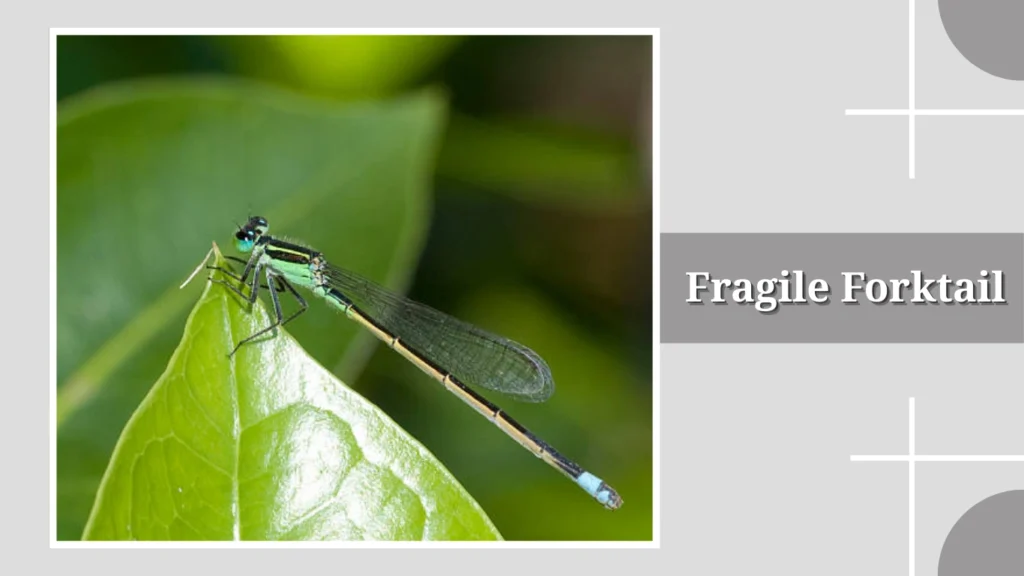
The Fragile Forktail is a small, delicate damselfly known for its thin body and subtle yet distinctive markings. Often found near quiet freshwater habitats, it is one of the more widespread forktail species in North America.
Identification
- Males have a black body with bright green thoracic stripes
- Females vary, often orange when young and green or blue when mature
- Clear, narrow wings held closed above the body
- Extremely slender form, typically 2.5–3.5 cm long
- Thin, delicate abdomen with pale segment near the tip
Habitat and Range
Fragile Forktails inhabit most of eastern and central North America. They prefer ponds, lakes, marshes, ditches, and slow streams with plenty of vegetation. They are commonly found in quiet waters, including human-made water bodies.
Behavior and Diet
These damselflies feed on tiny flying insects such as gnats, midges, and mosquitoes. Males often perch low on grasses or floating plants, defending small territories and making short flights to capture prey. Their gentle, hovering flight suits their slender build.
Life Cycle
Nymphs develop in shallow, vegetated waters where they prey on small aquatic insects. Adults emerge in spring and remain active throughout summer. Their delicate structure and variable colors make them a fascinating species to observe in wetland habitats.
14. Citrine Forktail
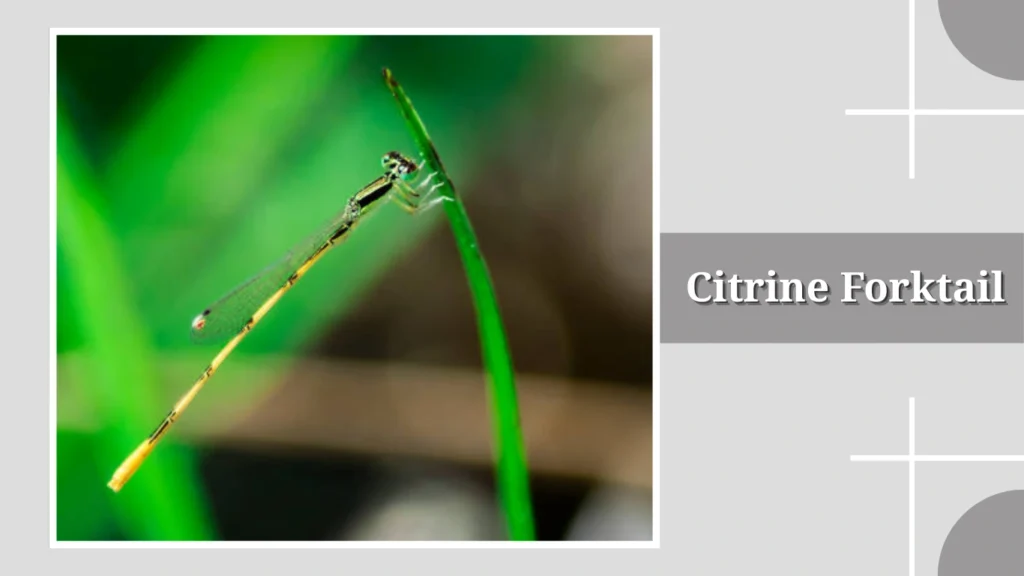
The Citrine Forktail is a tiny, bright-colored damselfly known for its warm yellow-orange hues. As one of the smallest damselflies in North America, it is frequently found around calm, vegetation-rich waters.
Identification
- Males have a yellow-orange thorax with a black dorsal stripe
- Abdomen is mostly black with a pale yellow or green tip
- Females are typically more muted, often greenish or brownish
- Very small size, usually 2–2.5 cm long
- Clear, narrow wings held closed when resting
Habitat and Range
Citrine Forktails are widely distributed across the United States, Mexico, and parts of Central America. They prefer ponds, marshes, ditches, lakes, and quiet streams with abundant floating or emergent vegetation.
Behavior and Diet
These tiny damselflies capture small insects such as gnats, midges, and mosquitoes. Males often perch on short grasses or water plants, defending tiny territories. Their small size allows them to hover lightly over vegetation as they hunt.
Life Cycle
Nymphs inhabit shallow waters, feeding on minute aquatic insects. Adults emerge in spring and remain active throughout warm months. Their tiny size and bright coloration make the Citrine Forktail a distinctive presence in wetland environments.
15. Orange Bluet
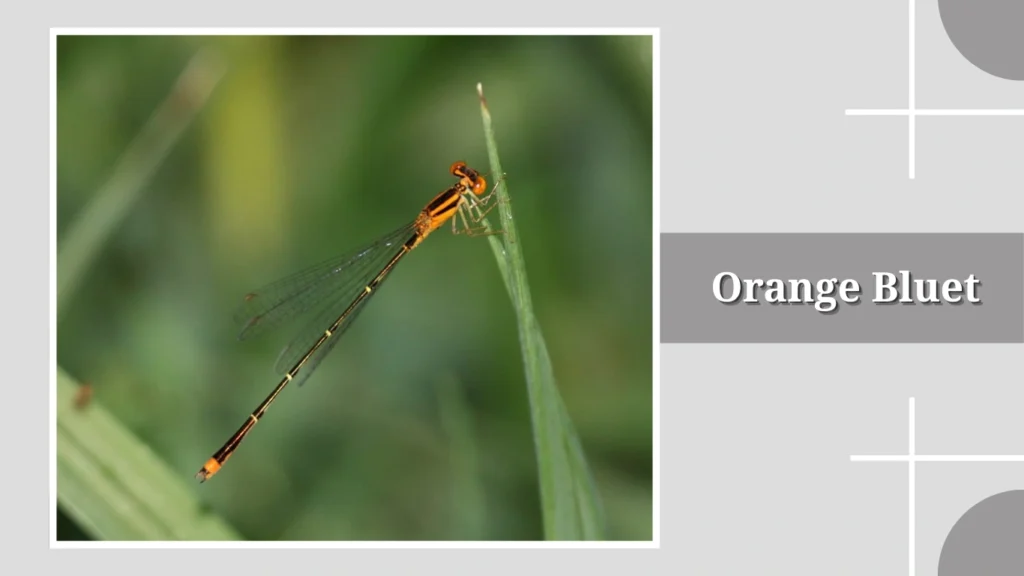
The Orange Bluet is a vibrant and attractive damselfly known for its bright orange coloration, making it stand out among the typically blue-toned bluet species. It is commonly found around ponds and lakes with rich, emergent vegetation.
Identification
- Males have a brilliant orange thorax and abdomen with black markings
- Females are usually darker orange or brown with softer tones
- Clear, narrow wings held closed when resting
- Slender body measuring 3–4 cm long
- Distinct contrast between orange body and transparent wings
Habitat and Range
Orange Bluets inhabit much of the eastern United States and parts of the Midwest. They prefer ponds, marshes, lakes, and slow-moving streams. Areas with abundant shoreline plants provide ideal perching and breeding sites.
Behavior and Diet
These damselflies are active hunters, feeding on small flying insects like gnats, midges, and mosquitoes. Males perch low on grasses or water plants, defending small territories. Their bright coloration makes them easy to spot during short hunting flights.
Life Cycle
Nymphs develop in shallow, vegetated waters, feeding on aquatic insects and other small invertebrates. Adults emerge in late spring and remain active throughout summer. Their vivid orange color and graceful flight make the Orange Bluet a standout species in freshwater habitats.
16. Tule Bluet
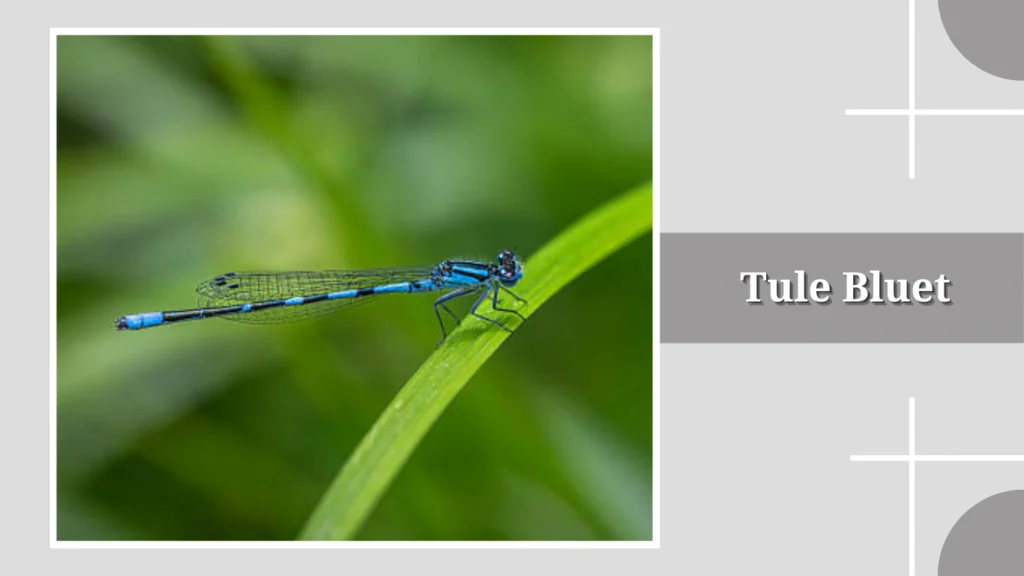
The Tule Bluet is a slender and elegant damselfly commonly found among tall wetland vegetation. Its calm behavior and preference for marshy habitats make it a frequent sight near reed-filled ponds and lakes.
Identification
- Males are bright blue with distinct black striping on the abdomen
- Females are typically brown or greenish with darker markings
- Clear, narrow wings held together above the body
- Slender body, usually 3–4 cm long
- Often found perched on reeds, sedges, or tall grasses
Habitat and Range
Tule Bluets are widespread in western and central North America. They thrive in marshes, ponds, lakes, and slow streams with abundant emergent vegetation. Their strong association with cattails, rushes, and sedges gives them their name.
Behavior and Diet
These damselflies feed on small flying insects such as midges, mosquitoes, and gnats. Males typically perch on vertical stems, defending narrow territories within dense vegetation. Their flight is gentle and often short, staying close to cover.
Life Cycle
Nymphs develop underwater among thick aquatic plants, hunting tiny invertebrates until they mature. Adults emerge in late spring through summer. Tule Bluets remain active during warm months, frequently perching and hunting within tall wetland vegetation.
17. Northern Bluet
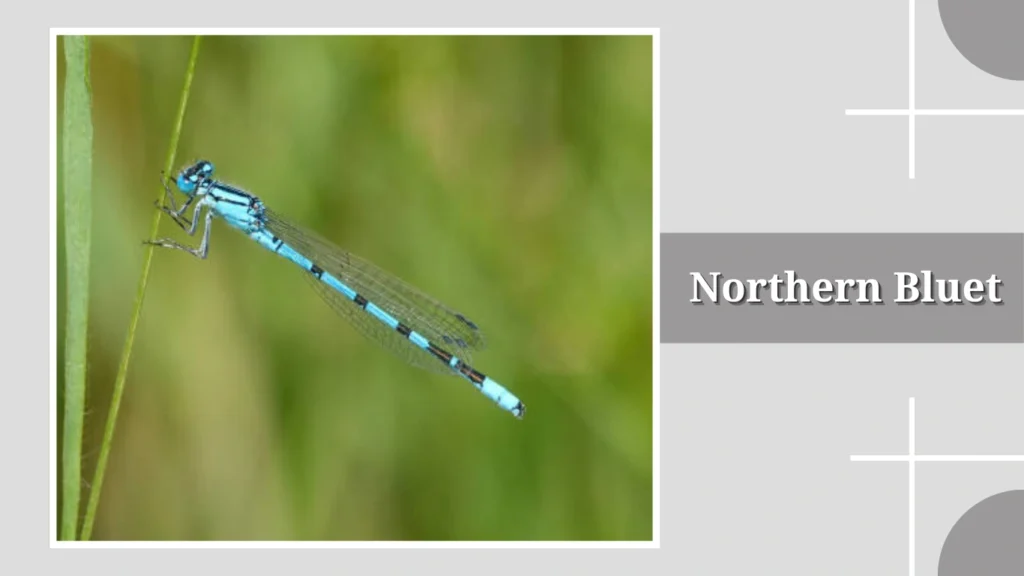
The Northern Bluet is a graceful, slender damselfly known for its cool blue coloration and preference for clean, quiet waters. Common across northern regions, it is often seen perched on grasses or floating vegetation near lakes and ponds.
Identification
- Males are light to medium blue with distinct black abdominal bands
- Females vary from blue to greenish or brown with darker markings
- Clear, narrow wings held closed when resting
- Slender body typically 3–3.5 cm long
- Subtle facial markings help distinguish it from similar bluet species
Habitat and Range
Northern Bluets are widespread across Canada, the northern United States, and parts of the Pacific Northwest. They inhabit ponds, lakes, slow-moving streams, and bog pools. Clean, cool freshwater with abundant vegetation is ideal for this species.
Behavior and Diet
These damselflies feed on small flying insects such as gnats, midges, and mosquitoes. Males perch along shoreline plants, defending small territories and making short, darting flights to capture prey. They are most active on warm, sunny days.
Life Cycle
Nymphs develop underwater among submerged plants, feeding on tiny aquatic invertebrates. Adults emerge from late spring through summer. Their subtle blue coloration and preference for cool northern waters make them a characteristic species of boreal wetlands.
18. River Jewelwing
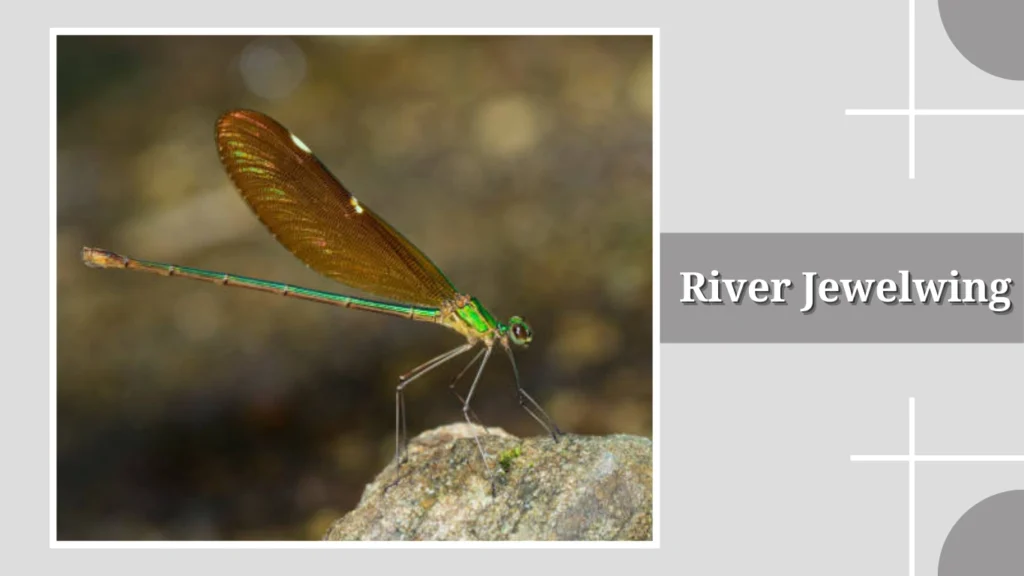
The River Jewelwing is a beautiful and graceful damselfly known for its shimmering wings and bright metallic body. With its butterfly-like posture and elegant flight, it is a striking sight along riverbanks and flowing streams.
Identification
- Males have metallic emerald-green bodies with dark, iridescent wings
- Females are bronze or greenish with clearer wings and a pale spot near the tips
- Broad wings held open when perching
- Body length typically 5–6 cm
- Strong, fluttering flight above flowing water
Habitat and Range
River Jewelwings inhabit eastern North America, especially along clean, fast-flowing rivers and streams. They prefer clear water with rocky or gravel bottoms and ample vegetation along the banks.
Behavior and Diet
These damselflies hunt small flying insects such as gnats, midges, and mosquitoes. Males defend riverbank territories and perform wing displays to attract mates. Their graceful, gliding flight makes them easy to observe as they patrol stretches of moving water.
Life Cycle
Nymphs develop in flowing streams where they feed on aquatic insects and tiny invertebrates. Adults emerge in late spring and are active through summer. Their iridescent wings and jeweled bodies make them one of the most striking damselflies in river habitats.
19. Southern Spreadwing
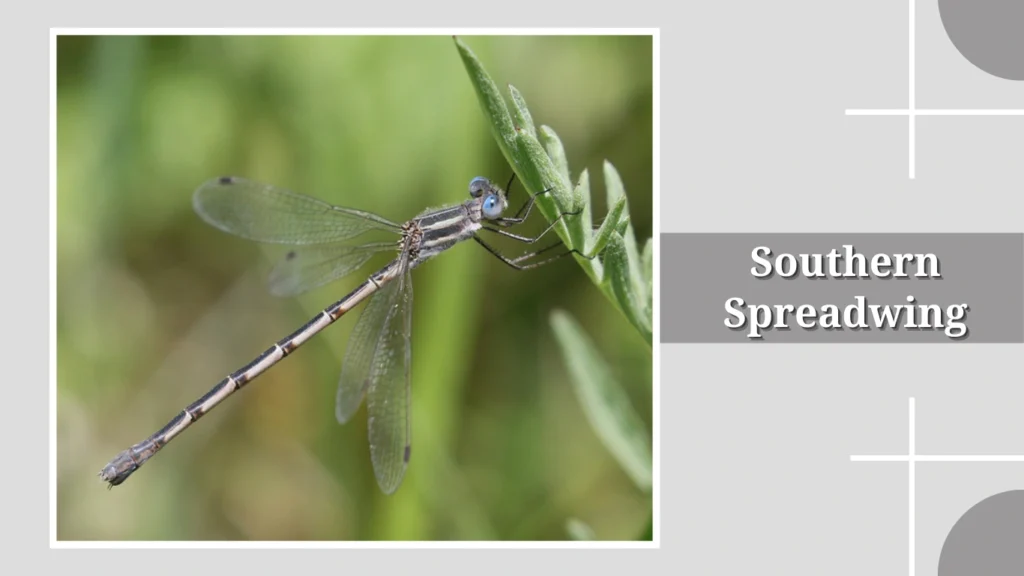
The Southern Spreadwing is a slender and distinctive damselfly known for its characteristic resting posture—holding its wings partially open rather than fully closed. Common in warm regions, it is often found near ponds and marshes with abundant vegetation.
Identification
- Metallic green or bronze thorax with pale stripes
- Abdomen long and slender, typically brown or blackish
- Wings held partially spread at rest, a key distinguishing trait
- Clear wings with narrow venation
- Medium size, typically 4–5 cm long
Habitat and Range
Southern Spreadwings are found across the southeastern United States, extending into parts of central and southern regions. They prefer ponds, marshes, ditches, and slow-moving streams with dense emergent vegetation such as reeds and grasses.
Behavior and Diet
These damselflies feed on small flying insects like gnats, midges, and mosquitoes. Males perch on tall grasses or reeds, often holding their wings at a half-open angle while watching for rivals and mates. Their flight is gentle and close to vegetation.
Life Cycle
Nymphs develop underwater among submerged plants, feeding on tiny aquatic insects and crustaceans. Adults emerge in late spring through fall. Their unique wing posture and warm-region distribution make the Southern Spreadwing a recognizable species in wetland environments.
20. Emerald Spreadwing
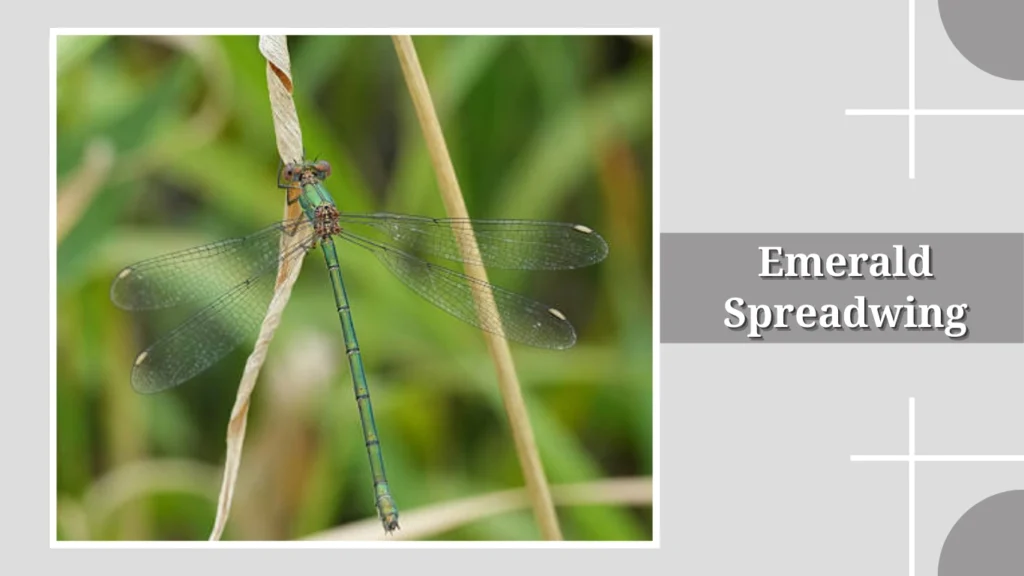
The Emerald Spreadwing is a striking damselfly known for its metallic green body and characteristic half-open wing posture. Often found perched on tall vegetation near calm waters, it brings a flash of iridescent color to wetland habitats.
Identification
- Metallic emerald-green thorax with bronze or golden reflections
- Long, slender abdomen that may appear dark or iridescent
- Wings held partially open at rest, typical of spreadwings
- Clear, narrow wings with delicate venation
- Medium size, usually 4–5 cm long
Habitat and Range
Emerald Spreadwings inhabit ponds, marshes, bog edges, and slow-moving streams across parts of Europe, Asia, and North America. They prefer areas with abundant tall grasses, reeds, or sedges for perching and egg-laying.
Behavior and Diet
These damselflies feed on tiny flying insects such as gnats, midges, and mosquitoes. Males often perch high on reeds or grass stems, maintaining small territories. Their iridescent bodies catch the light beautifully as they hover among wetland plants.
Life Cycle
Nymphs develop underwater among dense vegetation, feeding on small aquatic invertebrates. Adults emerge from mid-summer into autumn. Their metallic sheen and distinctive spreadwing posture make the Emerald Spreadwing an eye-catching species in freshwater habitats.
21. Great Spreadwing
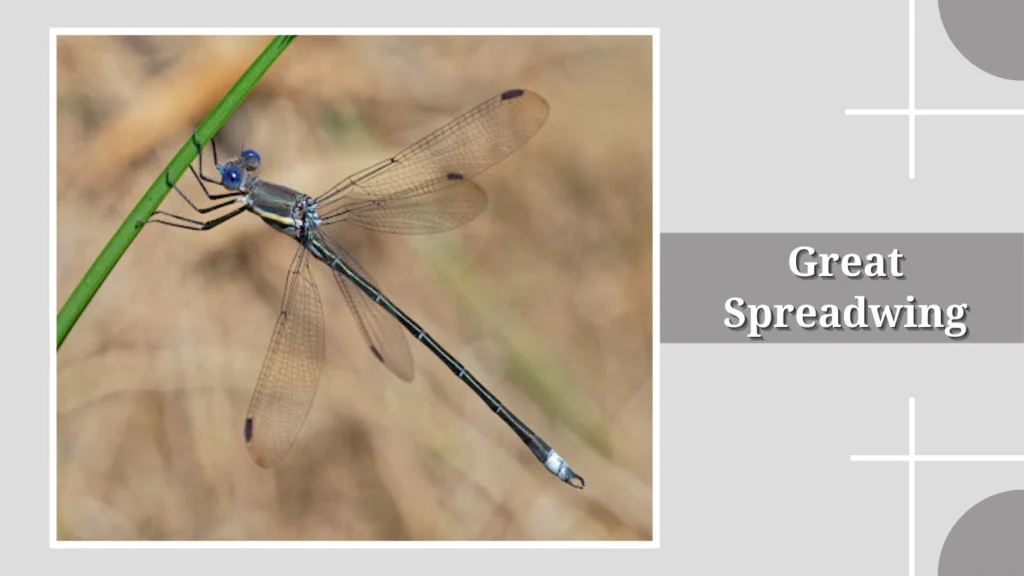
The Great Spreadwing is one of the largest spreadwing damselflies, known for its long body, elegant form, and distinctive half-open wing posture. Common in warm regions, it frequents ponds, marshes, and slow streams with tall vegetation.
Identification
- Metallic green or bronze thorax with pale side stripes
- Very long and slender abdomen, often appearing dark or blackish
- Wings held partially open at rest, typical of spreadwings
- Clear, narrow wings with fine venation
- Large size for a damselfly, typically 5–6 cm long
Habitat and Range
Great Spreadwings are found across parts of North America, especially in central, southern, and western regions. They inhabit ponds, marshes, ditches, and slow-moving streams with abundant reeds, grasses, or cattails.
Behavior and Diet
These damselflies hunt small flying insects such as midges, mosquitoes, and gnats. Males often perch high on tall vegetation, holding their wings partly open as they watch for rivals or potential mates. Their flight is smooth, hovering close to reeds and grasses.
Life Cycle
Nymphs develop underwater in densely vegetated shallows, feeding on tiny aquatic invertebrates. Adults emerge from late summer into autumn. Their large size and characteristic wing posture make the Great Spreadwing a distinctive and striking presence in wetland habitats.